We have finally started the fieldwork phase of our project.
Getting to this stage, however, took more than two months of preparation. In April 2026, we began working as a research team made up of two academic researchers and six peer researchers with lived experience of the UK asylum system. We first met online to get to know one another, discuss the aims of the project, and create space for peer researchers to ask questions about the research. This was followed by two in-person meetings at Aston University, where we explored and developed the research methods that will guide the project over the coming months.
Recognising that academic researchers and peer researchers often have different levels of experience with social research methods, we wanted to create a space where everyone could engage with the project on more equal terms. As part of this process, we revisited together what social research means in an academic context and discussed some of the key principles that underpin qualitative research.

While these workshops were facilitated by Gaja and Rémy, and aimed to strengthen the peer researchers’ confidence in social research methods, it was equally important that the process reflected a decolonial and collaborative ethos. Too often, research involving groups considered marginalised, vulnerable, or underrepresented reproduces unequal power relations, with academic researchers positioned as experts and participants as sources of data. Drawing on feminist and decolonial critiques of research practice, we wanted to approach collaboration differently.
Rather than assuming that academic knowledge should take precedence, we invited peer researchers to share their own understandings of research, reflect on their previous experiences of participating in research projects, and identify the issues they felt were most important to investigate. Together, we discussed questions such as: What helps build trust in research collaborations? What does ethical and meaningful collaboration look like in practice? How can lived experience shape not only the findings of a project but also its design and direction?
These conversations led us to collectively agree on a set of guiding principles for the project, including transparency, clear expectations regarding roles and contributions, mutual respect, and a commitment to centring the perspectives of people with lived experience of the asylum system.
The meetings also provided an opportunity to draw on the peer researchers’ experiences and identify key themes that the project should explore. Several issues emerged as particularly important. These included the emotional stress associated with being moved between different forms of asylum accommodation, the challenges experienced within both contingency and dispersal accommodation, feelings of safety and belonging, and the everyday realities of living in shared accommodation, particularly in mixed-gender settings.
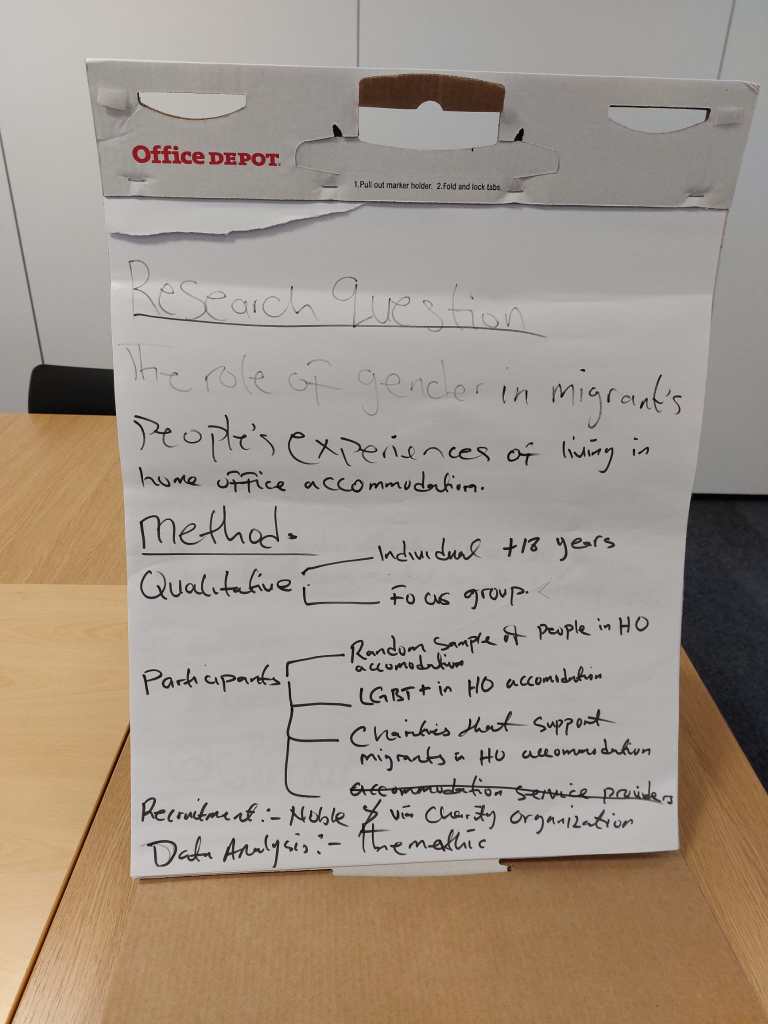
These early discussions have helped us shape the project’s priorities, while ensuring that the questions we pursue are grounded not only in academic debates but also in the experiences and concerns of those most directly affected by asylum accommodation policies.
In our next blog post we will reflect on what we did and learnt from our team second meeting.
Leave a Reply